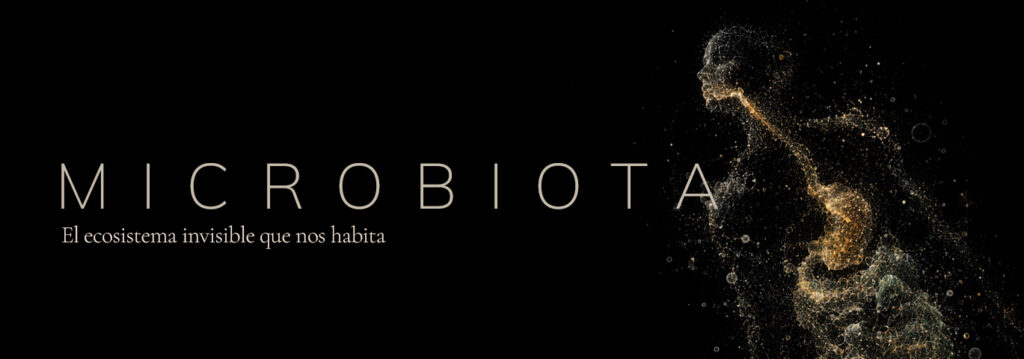
MICROBIOTA, The Invisible Ecosystem within us, is an art and science workshop co-funded by the Spanish Foundation for Science and Technology (FECYT) and Digital Culture, within the Department of Culture of the Government of Catalonia.
The aim of this initiative is to bring science closer to society by connecting the public with researchers and their work through an experiential and emotional approach, highlighting the benefits of scientific research for people and its impact on everyday life.
Workshop #23 – MICROBIOTA
Introduction
EPSN 2025 video, last edition
Public Presentation
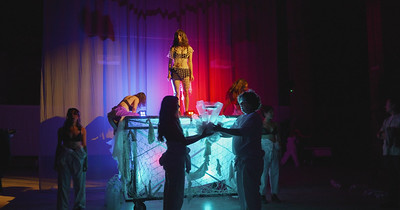
On November 7 and 8, MICROBIOTA opens its doors to the public to share the results of a collective research and creative process in which artists, scientists and technologists have worked together to explore the invisible universe of microorganisms that inhabit our bodies.
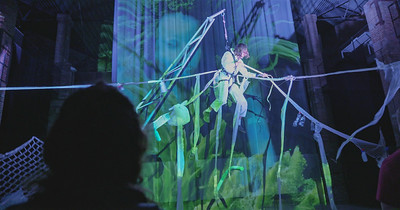
Through an immersive and participatory performance experience, audiences will discover the complex relationships that exist within our bodies and reflect on how the microbiota influences our everyday lives.
The experience will be followed by a Performaforum, a space for discussion and exchange between the audience, creators and scientific experts, exploring the connections between the artistic proposal and the research that inspires it.
– Dates: November 7 & 8, 2026
– Venue: El Born. Museu d’Història de Barcelona
– Registration: https://forms.gle/sNtq1ZBXkqwaL4kR6
What is an art and science workshop?
Fundació Èpica is offering 30 scholarships to selected creatives to participate in this art and science workshop, which will take place from October 12 to November 8, 2026 (inclusive).
The Invisible Ecosystem Within Us proposes an innovative approach to science communication through collective creation and participatory experience.
PHASE 1 (Online) – Knowledge Transfer Sessions (October 13–14)
The project begins with a knowledge transfer phase in which researchers specializing in the human microbiome share the most relevant scientific foundations of the gut microbiota with participants.
Through a series of working sessions, the scientists will provide an in-depth explanation of the composition of this biological ecosystem.
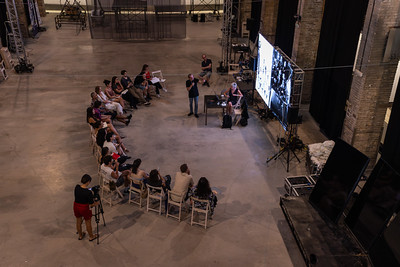
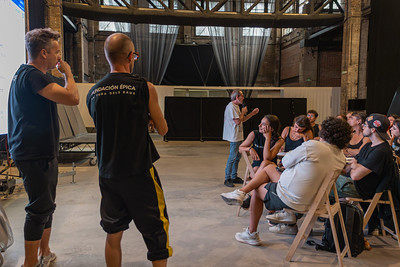
PHASE 2 (On-site & Intensive) – Concept Development, Design and Public Presentation (October 26 – November 8)
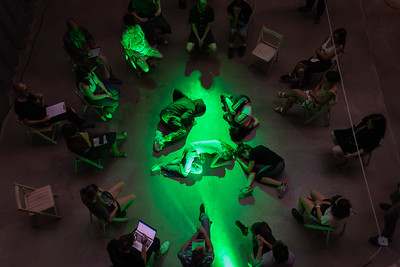
Building on this scientific knowledge, participants will engage in a process of artistic translation, reinterpreting biological phenomena through performative actions, participatory dynamics, body language, audiovisual resources, and audience interaction.
Rather than literally representing how the microbiota functions, the project seeks to create experiential metaphors that reproduce its essential dynamics. In this way, the audience becomes an active part of the performance, taking part in actions that reflect processes such as cooperation, transformation, communication, resource exchange, competition, adaptation, and the creation of balance within a complex ecosystem.
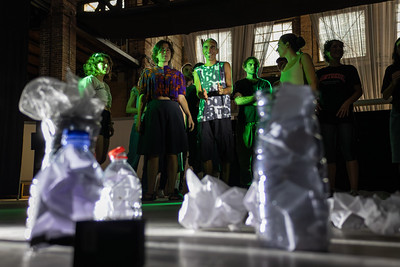
FINAL PHASE – Public Presentation and Performaforum (November 7–8)
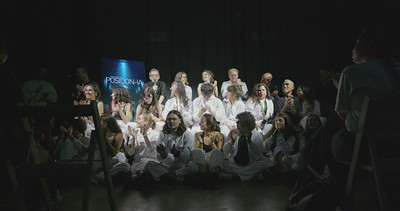
The final phase of the project will consist of a public presentation lasting approximately 45 minutes, followed by a Performaforum, an open dialogue between scientists, artists, and the audience.
During this discussion, participants will explore the connections between the experience they have just lived and the biological phenomena that inspired it, allowing them to compare perceptions, share insights, and collectively reflect on the influence of the microbiota on our daily lives, health, and emotional well-being.
The project aims to develop new forms of science communication based on experience, participation, and artistic creation, building bridges between specialized knowledge and society.
Participating Experts
Chaysavanh Manichanh
Vall d’Hebron Research Institute (VHIR)
Researcher and head of the Microbiome Research Group at the Vall d’Hebron Research Institute (VHIR). Her work focuses on the study of the gut microbiota and its relationship with health and disease, exploring how the microorganisms living within our bodies influence the way they function.
KC Huang
Stanford University
Professor of Microbiology and Immunology at Stanford University (United States). His research combines biology, physics and computational methods to understand the organization, behavior and interactions of bacteria. His interdisciplinary approach offers new perspectives on the microscopic world.
Ramon Perisé
Mugaritz
Involved in research and gastronomic creativity at Mugaritz, an internationally renowned project recognized for its experimental approach to cuisine. His participation brings a perspective that connects food, experimentation and creativity, expanding the dialogue between science and art at the heart of MICROBIOTA.
Webinar
It took place on September 7 at 16:00 CEST.
How to participate in the initiative?
1. Read the call guidelines carefully.
2. Prepare the required materials to submit your application
3. Access the application form and submit your candidacy.
Important Information
– Location: El Born. Museu d’història de Barcelona
– Slots available: up to 30 grants available.
– Price: This is a training activity with a scholarship (the training is valued at €3.500.00). The scholarship does not include diets, transportation and accommodation expenses, as well as management and registration expenses. The participant, only in case of being selected, must pay the entity when formalizing the registration the amount of €150, which will cover the expenses of management, registration and insurance.
– Profiles: The call is aimed at creative people: artists, scientists and technologists, especially those multidisciplinary and hybrid profiles that want to be part of a disruptive and innovative experience.
Key Dates
Call for applications:
Applications open: July 2.
Application deadline: September 20.


Dates of the workshop:
– Phase 1 (Online): October 12–13.
– Phase 2 (On-site): October 26 – November 8.


SPONSORS / PARTNERS